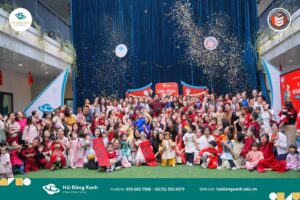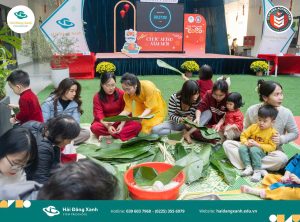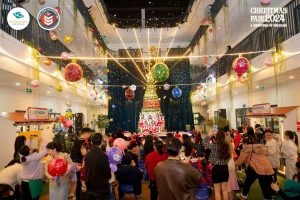
Easter – a celebration of light, hope, and renewal – became a magical journey at Hai Dang Xanh STEM Preschool, where our little sailors embarked on a colorful and meaningful adventure beyond space.

In 2024, our young sailors transformed into brave ocean warriors, rescuing marine creatures and restoring peace to the vast sea. Their courage made their names shine brightly across the region.
This year, the journey did not stop on Earth. The children set off on an interstellar voyage — traveling from Earth to Venus and Mercury — to rescue the Sun God who was surrounded by darkness.

An imaginative story, yet sparkling with real lessons: about how the universe works, about courage, compassion, and responsibility for our blue planet.

The festive atmosphere became even more vibrant with a thrilling and surprising musical performance, guiding the children through a range of emotions — from anticipation and excitement to the joyful triumph of light over darkness.

Afterward, the children entered a series of exciting challenges at different “space stations,” such as assembling planet puzzles, navigating Mercury’s terrain, shaping the Earth, and piloting a spaceship away from the Sun…


Each activity became a joyful note in the celebration, a sparkle of light reflected in children’s eyes. Smiles, energetic footsteps that did not want to pause — all came together to create an Easter season rich in STEM spirit, rich in love, and distinctly Hai Dang Xanh.
The journey may have come to an end, but the light continues to shine and spread far beyond.