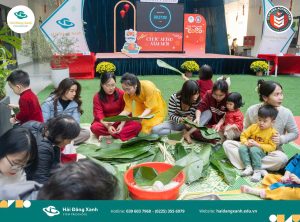

For preschool-aged children, the project is implemented in three basic steps: Project initiation, project implementation, and project closure. During the exploration process, children plan, execute, and manage their own experiential activities; the teacher’s role is only to guide and support them. At this stage, the child is the central figure, and with the teacher’s help, they independently solve a complex learning task, both theoretically and practically. Through this, they create their own products and can present them to others. This enhances their self-reliance and active participation in activities; it encourages and develops creativity, responsibility, teamwork skills, and especially the ability to think critically and solve complex problems.
This is an engineering design process that allows children to create simple devices such as gadgets, toys, or learning tools according to their needs and desires, under the guidance and support of teachers and classmates. It helps children solve problems in their lives.
This learning model helps children focus on the learning process, be proactive and collaborative, and provides challenges appropriate to their age and ability to explore and discover. It encourages them to surpass themselves and persevere.